
Now Open: 2026 Term 1 Enrolments →

[HSC] Economist: 16 – 22 Feb

A summary of this week's Economics news: IMF warnings, rising rates, and new tariffs.

Will Brothers

Will Brothers

Economics Tutor, Band 6 in Economics

🏢 IMF releases a report on the Australian economy; warns Labor government about its 5% deposit scheme
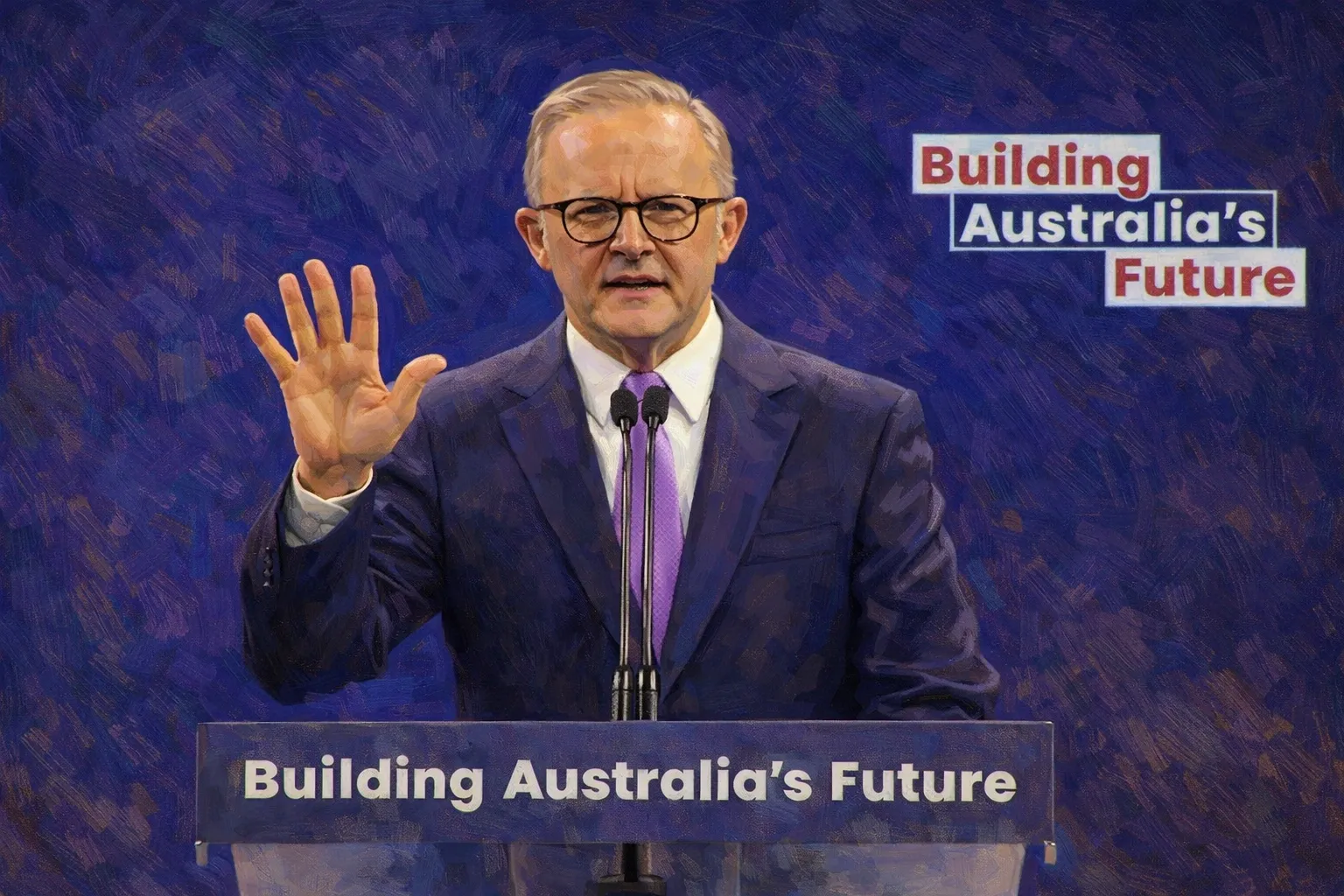
2025 ARTICLE IV CONSULTATION—PRESS RELEASE; STAFF REPORT; AND STATEMENT BY THE ALTERNATE EXECUTIVE DIRECTOR FOR AUSTRALIA

Change 5pc deposit scheme, IMF warns Labor

In a recent report, the International Monetary Fund warned the Labor government of the effects of their 5% deposit on housing loans scheme in that it could drive up already high house prices.

The Labor government implemented the policy to enable first-home buyers to purchase property with only a 5% deposit, without having to pay lenders’ mortgage insurance. Notably, the scheme was substantially broadened last year, with the removal of limits on both the number of government-guaranteed loans and the income eligibility thresholds for applicants. As well as increasing the price threshold for properties to be eligible.

In the IMF’s recent assessment of the Australian economy, the fund said that “a holistic strategy is essential to tackle the structural barriers that impede new housing supply and improve housing affordability,” calling out Labor’s 5% deposit for instead contributing to price pressures. This is largely because the policy’s main impact is on demand (rather than needed supply), increasing demand for property, hence pushing already high prices. Noting that “the 5 per cent deposit scheme to improve affordability for first home buyers may contribute to price pressures in the near-term by pulling forward home purchases while financial conditions ease.”

A spokesperson for Housing Minister Clare O’Neil said in response to the IMF report that “the expansion of the scheme will have a very minor impact on prices, with modelling from Treasury pointing to a 0.6 per cent price impact over 6 years.” However, according to Cotality, a data analytics firm, the price of eligible homes below the scheme’s price caps grew 3.6% in the last three months of 2025, greater than the 2.4% price growth in houses not covered by the scheme; pointing towards the scheme being unhelpful for house prices, and thus CPI (inflation).

This is a reminder of the political constraints tied to fiscal policy, which limit its effectiveness. Because the main goal of any political party is to get (re)elected, policies like this, which seem to help voters and gain positive views from users, actually end up causing more harm than good for the broader economy. Illustrative of the limitations of fiscal policy.

The report also outlines the potential of Australia’s superannuation scheme, noting that there exists a potential to leverage super funds’ substantial capital to support investments that enhance productivity through a greater quality of the factors of production, possibly mitigating the impacts of an aging population, particularly in areas such as infrastructure, housing, and energy transition.

Likewise, the report highlights the role of the superannuation system in easing the fiscal burden typically associated with population ageing, mitigating excessive age pension spending and other forms of social security. Consequently, Australia stands out within the OECD as one of the few countries not expected to face rising public pension expenditure over the coming decades despite demographic pressures from an older population.

HSC Relevance

  • The 5% deposit scheme as a government policy has been ineffective at targeting inflation caused by house prices; a major contributor to CPI.
  • Government policies enacted by the federal government are subject to political constraints limiting their effectiveness.
  • The IMF as an international organisation can also play a role in policy advice.

🏦 Monetary Policy and The Current State of The Australian Economy

Surprise rise in jobs boosts chances of rate increase next month

RBA concedes low unemployment fuelled inflation

RBA issues dire warning on economic growth

Earlier in the month, the RBA decided to increase the cash rate target for the first time since Nov 23’. The RBA increased their cash rate target by 25 basis points to 3.85%. 

While inflation has fallen substantially since its 7.8% peak in Dec 2022, it picked up in the second half of 2025, reaching 3.8% in Dec 25’, well above the RBA’s 2-3% target band.

The Bank has upgraded its central forecast for GDP growth, reflecting the stronger-than-expected household spending and business investment recorded in late 2025. Growth is now projected to exceed estimates of the economy’s productive capacity for much of 2026, meaning spare capacity is expected to diminish in the near term, possibly meaning a further tightening of the labour market, something Bullock notes is already “a little tight.”

The reasoning for this increase in the cash rate target is said to be likely capacity pressures [explainer below 🧠], in part reflecting the increasing demand in recent months. This increase in demand can be seen with private investment rising 2.9% (Sep Q 2025) and New Capex rising 6.4% (Sep Q 2025).

🧠 Explainer Here, when we talk about “capacity pressures” or “spare capacity” we are referencing the existence of a gap between where the economy is currently operating and where the economy’s potential GDP is, that is, the natural level of income (Yn). We can show this in a graph below, by increasing demand (AD0 to AD1) past the equilibrium point. Here, the inflationary gap represents the cause of this recent inflation, caused where aggregate demand rises past the point where supply can structurally respond (like the NAIRU!), causing inflation to rise rather than any meaningful increase to long-run output ☹️ That is, operating past the point that can be sustained by current factors of production.

A visible marker of these capacity pressures is that through late 2025 the unemployment rate fell by 0.2 percentage points from 4.3% in November 2025 to 4.1% by December 2025, with Bullock noting that the unemployment rate is below what the economy can sustain without overheating. With a contemporaneous increase in inflation from 3.4% in November 2025 to a worrying 3.8% in December, this sharpens concerns that the economy is running “too hot” (above capacity), shaping the RBA’s board vote to increase the cash rate target.

With an increased cash rate, the impacts on the economy act through the transmission mechanism. For example, through the savings and investment channel, with a higher cash rate target leading to higher commercial interest rates, this should encourage households to increase their savings in an inter-temporal substitution effect 🧠 where households earn more interest on savings. Thus, leading to lower consumption, decreasing aggregate demand in hopes to reduce an inflationary gap.

Additionally, the upward move in the cash rate has prompted financial market forecasts to assume that the cash rate will increase by ~60 basis pts by the end of the forecast period; contrasted with November forecasts assuming the cash rate would decline 30 basis points. Thus, this has been priced in, with the exchange rate (AUD/USD) appreciating 11% since November, which will flow through to the economy via the second stage of the exchange rate channel.

HSC Relevance

  • The RBA increased the cash rate to 3.85% — the first increase in over 2 years.
  • The rise was in response to increasing inflation, capacity pressures, and an overly tight labour market.
  • The effects of this are likely to slow down aggregate demand in the economy, hopefully loosening the labour market and placing downwards pressure on inflation.

🛡️ In Trump’s Shadow, Australia Quietly Reaches for Its Own Tariffs on Chinese Steel

Australia quietly builds tariff wall on Chinese steel exports

Coming out of a year defined by Trump’s aggressive use of tariffs, Australia has been taking a quiet step in the same direction, slowly imposing tariffs on Chinese steel products amid growing concern about the health of its domestic industry.

The most recent measure is a 10% levy on ceiling frames imported from China, imposed after the Anti-Dumping Commission concluded that the products were being unfairly subsidised and “dumped” into the Australian market at below-cost prices, undercutting local manufacturers and overseas manufacturers, making for a possible over-reliance on Chinese manufacturing. It follows interim tariffs of between 35% and 113% on a range of other steel products, including bolts and hot-rolled coil steel, which came into effect in December.

The moves come as the global steel trade is being reshaped by American protectionism. With tariffs in place in the US, Australia is inadvertently capturing displaced supply, absorbing the overflow. Australia consumes around 8 million tonnes of steel annually, whilst producing only 5.5 million tonnes domestically, leaving us heavily exposed to this surplus in supply.

The consequences for local industry have been visible. In NSW alone, 15 fabricators have gone out of business, and the Australian Steel Institute chief executive, Mark Cain, has said the surge in steel product imports that started two years ago was distorting the market.

However, the tariffs are not without economic trade-offs. By raising the cost of imported steel inputs for importers, this creates an imported cost push inflationary environment across construction and infrastructure as firms importing steel pass on costs to consumers, especially so with Australia already dealing with heightened building costs. 

At the same time, under the domestic employment reason for protection, such tariffs could redirect demand toward domestic producers, supporting jobs in-house, even if at the expense of inflation. Similarly, this may allow Australia to redirect demand to alternative sources overseas, mitigating risks associated with an over-reliance on Chinese steel.

HSC Relevance

  • Demonstrates how dumping is being used as a reason for protection in Australia.
  • How tariffs as a method of protection can lead to inflationary pressures due to both direct and passed-on costs.

⚖️ The ACCC Takes Coles to Court

Against the spirit of ‘Down Down’: Coles manager’s warning revealed in trial

Coles set to face the music over ‘misleading’ discounts

Coles Case Will Not Impact Reputation, But ‘Regulatory Pincers’ Might – Ritson & Allison\

The Australian Competition and Consumer Commission (ACCC) was a body set up by the government in microeconomic reform to manage competition rules and Australian Consumer Law.

On the first day of a 10-day Federal Court hearing into whether Coles breached Australian competition and consumer laws, lawyers for the Australian Competition and Consumer Commission (ACCC) read out emails exchanged between senior Coles executives questioning whether ‘illusory’ discounts were in the spirit of the supermarket’s ‘Down Down’ campaign.

Bryan Raymond, an analyst at JPMorgan investment bank says the time in court may alter customers’ perception of value at supermarkets, resurfacing the damage that prior price gouging accusations had on reputation. Although the desired outcome of this hearing is that Australian businesses are subject to an efficient competition policy that makes for competitive behaviour and fair practice, meaning competition is based on real prices, not “illusory” discounts. As an example, the ACCC alleges Coles sold Strepsils throat lozenges for $5.50 for over 20 months, raised to $7 for 1 month, then placed on a “Down Down” promotion price of $6.

The ACCC alleges that Coles returned to the tactic time and again as a deliberate strategy, banking on the fact that customers would shop elsewhere or cut back on purchases the moment they suspected prices were climbing rather than coming down. The alleged misconduct took place over one of Australia’s sharpest periods of food price inflation (February 2022 to May 2023), with peak inflation hitting 7.8% (Dec 2022), when grocery costs were a major driver of CPI. Thus, allegedly, Coles was engineering artificial price signals, directly distorting the price mechanism and undermining its efficiency by distorting consumer decision-making.

In similar news, a separate case against Woolworths over its “Prices Dropped” campaign will be heard later this year. Research by the Phronesis consultancy, a consulting firm, suggests that ACCC actions have historically had minimal long-term effects on consumer trust and market outcomes, with companies often recovering their share price within an average of 75 days. This raises questions about whether penalties are sufficient to genuinely deter anti-competitive or misleading behaviour by firms with significant market power. Raising the question on the efficacy of current competition policy.

HSC Relevance

  • This case illustrates the role of the ACCC as a government body in regulating Australian Consumer Law to address possible disinformation where engineered price signals disrupt the operation of an efficient market.
  • The alleged conduct represents a misuse of market power in an oligopolistic market. Coles and Woolworths together hold around 65% of the Australian grocery market, giving them significant price-setting ability and making consumer deception particularly harmful at scale.

🪙 Supreme Court Rules Against Trump’s Use of Emergency Trade Power; New 15% Tariff Follows

Donald Trump hikes global tariff rate to 15pc after Supreme Court loss

Trade minister says Australia exploring ‘all options’ after Trump announces new tariffs

Donald Trump answers a Supreme Court rebuke with new tariff threats

Since the start of Trump’s presidency this term, his bypassing of Congress to set tariffs has been under a law known as the International Emergency Economic Powers Act (IEEPA). Since then, as of the 20th of February 2026, the Supreme Court ruled against this power in Learning Resources v Trump, ruling that the bulk of the tariffs were illegal. In this, Chief Justice Roberts noted how the Constitution’s framers “did not vest any part of the taxing power to the executive branch” during peacetime.

The ruling hits Trump’s sweep of tariffs hard, where Yale University’s Budget Lab calculates that it will around halve the U.S.’s effective tariff rate. However, in Trump fashion, the President swiftly pledged to use “methods, practices, statutes and authorities that are even stronger than the IEEPA tariffs.” That is, Section 122.

Section 122 is a separate, untested law allowing tariffs of up to 15%. Currently, this is in play, with the 15% applying unilaterally. Though, this can only be in place for 150 days before needing congressional approval.

Trade between the U.S. and countries such as Malaysia and Cambodia would continue to be taxed at the negotiated 19% rate, even though the universal rate is lower. The change could mean a drop in tariffs on countries like Brazil, who did not negotiate a deal with the U.S. to lower its 40% tariff rate, now possibly seeing a fall to a 15% tariff.

The main economic impact of this is a growth in uncertainty in the global economy, something that is quite high right now. This may be that countries opt to trade with partners outside of the U.S. for a more stable trade environment, and Trump’s tariffs continue to seem isolationist. That is, the continuing retaliatory tariffs from countries such as China or Brazil could cause trade between those nations and the U.S. to contract, while simultaneously encouraging greater trade flows among those countries themselves. The net result is that the U.S. may find itself most harmed by its own protectionist stance, increasingly cut off from the gains of comparative advantage that free trade would otherwise afford it.


The future of Trump’s U.S. trade policy remains uncertain, with decisions made over the next 150 days likely to set the trajectory of global trade relationships for the remainder of the decade, whether that be a slow isolation of the U.S. from the global economy, or a recovery of trust between the U.S. and its allies.

HSC Relevance

  • Understanding the current situation on global protectionist policy for Topic 1 protection essays.
  • The effects on the global economic climate and how trade policy can impact emerging trade relationships.

Read More:

Maximise Your Chances Of Coming First At School

Trial any Project Academy course for 3 weeks.

NSW's Top 1% Tutors

Unlimited Tutorials

NSW's Most Effective Courses

Access to Project's iPad

Access to Exclusive Resources

Access to Project's Study Space