
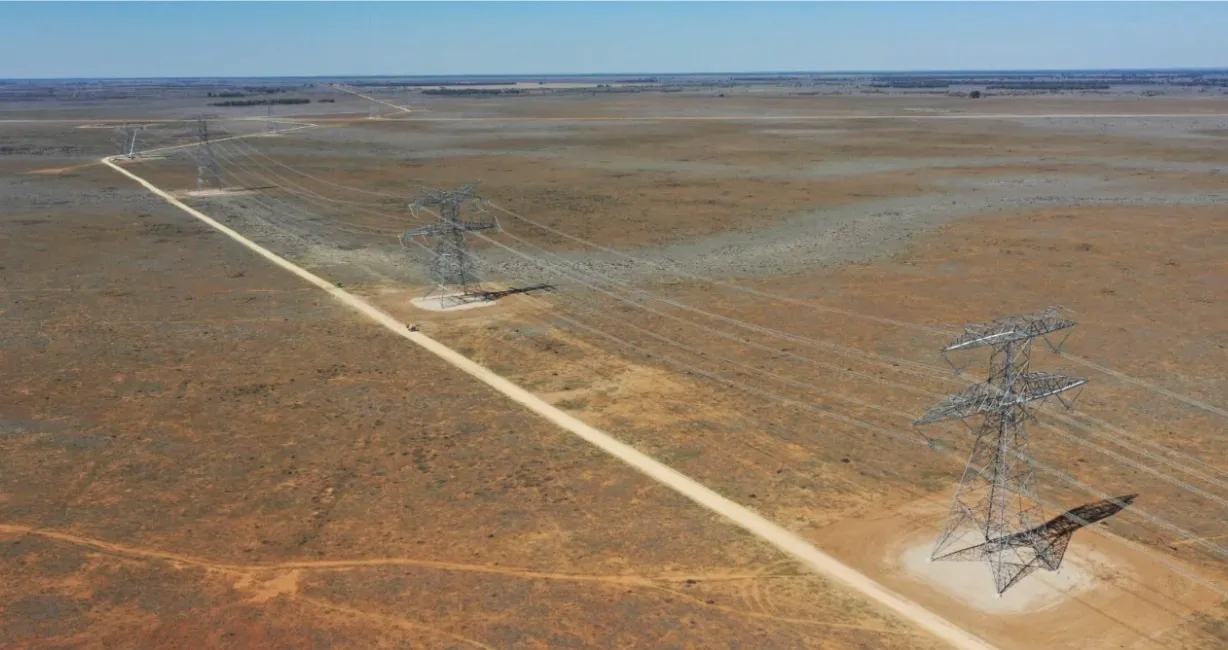

Australia completes landmark renewable energy super highway
Australia has just completed the largest expansion of its electricity grid in decades - this comes with the completion of Project EnergyConnect, which is a 900 km transmission link connecting the states of NSW, Victoria, and South Australia.
Insufficient grid linkage has been a key reason preventing adoption of renewable energy in Australia. The expansion of these electricity grids (essentially networks that produce and transport electricity from renewable power sources) will mean significantly more households in rural areas will have access to solar and wind energy.
This will help accelerate Australia’s transition away from non-renewable energy sources, aligning with the government’s goal to reach net zero emissions by 2050. Currently, renewable energy accounts for about 33% of all electricity generation - Transgrid expects this to grow to 90% of electricity generation by 2035.
Despite the benefits that the project will bring, it has not been without criticism. The project has cost $4.1 billion, a cost that will be passed down to consumers, translating to higher electricity prices. Additionally, the government intends to further expand the grid, adding to these costs. To offset this, the government has proposed to offer $30-$75 electricity price cuts per year in the future.
HSC relevance:
- This is strongly connected to the environmental sustainability topic in both topic 3 and 4. Specifically, a renewable energy grid constitutes a positive externality, as its construction benefits wider society through promoting lower carbon emissions.
- This is also linked to the Aggregate Demand (AD) and Aggregate Supply (AS) side of economics. Government expenditure is a component of AD: the construction of such a project requires intense labour, creating incomes for employees involved. At the same time, lowering carbon emissions ensures that resources are preserved for the future, preventing AS (total output) from diminishing.

US cancels Iran strikes and tries for peace deal
The US President Donald Trump has claimed that the US and Iran could potentially sign a peace deal this weekend, enabling ships to pass through the Strait of Hormuz. For context, the Strait of Hormuz is a narrow maritime chokepoint in the Middle East, and is one of the most important trade routes for oil (approximately 20% of the world’s petroleum and 20% of LNG passes through the strait).
Due to the geopolitical conflict between Israel and Iran, Iran previously blocked the strait, preventing oil from being transported. This reduction in the supply of oil led to oil prices rising by roughly $20 - 24 a barrel since the start of the conflict.
The agreement is therefore anticipated to ease oil prices, allowing cost of living pressures for households around the world to fall. Despite the American desire to sign the deal, Iran has shown some hesitancy as their government has not reached a final decision on the agreement. Iran has demanded in return that international sanctions be lifted against them and also the release of billions in frozen assets.
HSC relevance:
- This links directly to Topic 3, specifically the inflation issue. A reduction in oil prices would likely lead to cost push inflation easing, given that oil is used in the production of most goods. Lower oil prices will also ease petrol costs for many Australians, which should come as a welcome relief!
- Expanding on Topic 3, this also links to economic growth. Recalling the formula for AD (C+I+G+X-M), one of the major drivers of consumption and investment is consumer and business confidence. If investors are optimistic about a peace deal, they may increase their investments, as anxiety about geopolitics disrupting profits subside.
ASX surges after possibility of a peace deal
Australia’s sharemarket has had its best week in two months after the US declared their intentions to sign a peace deal with Iran. The S&P/ASX 200 gained 170.8 points on Friday, up 1.98%. For those not yet familiar with the lingo of financial markets, this essentially means that the share value of the largest 200 companies listed on Australia’s stock market increased by an average of 1.98% (equal to billions of dollars in share increases).
This positive development is largely attributed to strengthening investor confidence. When conflict eases, fears around disrupted trade routes or supply chain shocks fall. Investors expect more profitability from businesses and therefore are more willing to buy shares. This increase in demand for shares will drive up share prices quickly.
Interestingly, share prices for energy companies have declined. This is due oil prices dipping slightly, reaching their lowest since mid-April (though the prices are still significantly elevated compared to last year). As the possibility for a peace deal emerges, transport prices through the Strait of Hormuz are likely to fall, leading to overall oil price reductions. If investors believe this will happen, they may sell off their oil shares to avoid losses from expected declines in oil revenues.
HSC relevance:
- This links to Topic 3 of the syllabus, as stronger investment in financial markets strengthens the ‘I’ component of AD, fuelling stronger economic growth
- The fact that geopolitical conflict can still influence Australia’s economic objective speaks volumes to the impacts of Globalisation (Topic 1). One of the impacts of globalisation is increasing financial flows, meaning whatever happens to prices globally can impact our share market
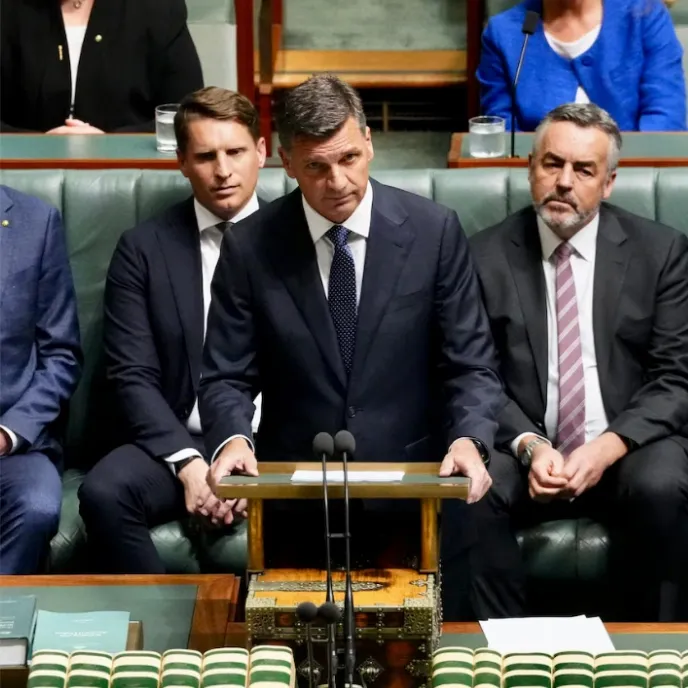
Debate about Labour’s 2026/27 Budget continues
Despite the budget being released in May, debate about Labour’s changes to negative gearing have continued. Earlier this week, Nationals Leader Matt Canavan described the Labour’s budget as a ‘total and utter mess’, with Newspoll revealing that it is the most unpopular budget since 1993.
For context, negative gearing occurs when the expenses of owning an asset exceeds the income it generates (e.g. your mortgage repayments exceed the rental income that you earn off a property). In Australia, you are allowed to use this financial loss to offset your salary, reducing your taxable income and the amount of tax you pay.
Negative gearing for residential properties will be abolished from July 2027, and investors will no longer be able to offset rental losses against salary. This detriments property investors, as they can no longer offset rental losses against their salaries, removing a significant tax advantage. However, the most contested issue is the impact of the change on renters. Fewer investors in the market could mean less rental properties available, limiting supply and driving up rental prices.
Another key detail is existing property owners who purchased a house before 2026 will not lose access to negative gearing. This means they are incentivised to not sell their properties as this would mean losing their tax advantages. As a result, supply of housing may remain constrained, further pushing prices up.
The change was introduced so that new home buyers do not need to compete with property investors in the housing market. However, critics have argued that the change will instead lead to higher house prices, further pushing first home buyers out of the housing market.
HSC relevance:
- This is very relevant to the distribution of income and wealth topic in Topic 3. The justification was that negative gearing unfairly benefits high income earners who can afford to invest in property. Making it harder for property investors to buy new homes means that it is harder for them to accumulate wealth, potentially improving wealth inequality.
- However, remember that the effects of this are yet to be seen, so critics still argue that the change could raise housing prices, making it harder for first time buyers to accumulate wealth. This would lead to increased wealth inequality
- The price of housing rising would lead to an increase in inflation, as housing is a major purchase for many Australian households.
![[HSC] Economist: 2nd May](/assets/blog/hsc-economist/hsc-economist-2nd-may/image.webp)

![[HSC] Economist: 27 September](/assets/blog/hsc-economist/hsc-economist-27-september/image.webp)

![[HSC] Economist: 7th February](/assets/blog/hsc-economist/hsc-economist-7th-feburary/image.webp)
![[HSC] Economist: 15 Sep - 1 Oct](/assets/blog/hsc-economist/hsc-economist-15-sep-1-oct/image.webp)